Lights
Lighting that follows daylight
The more sun comes in, the fewer lights are on. Without touching a switch.
The three signals it uses, how a room goes from occupied to energy-saving mode, what gets installed and what the log of every kWh does. The screen is the Eco module of the hub, with sample data, and you can use it.
What most rooms have today doesn't know whether anyone is inside. Eco combines three signals (presence, door and booking) so it never marks a room as empty with someone inside.
The key card holder detects a card: leaving an extra one in the slot is enough to fool it, and it doesn't work with a mobile key, a code or a wristband. When it cuts, it cuts everything, including the fridge and the chargers. Eco detects the person and only pauses the climate control and the lights.
A PIR only sees movement and switches off on a guest who is sleeping or studying without moving. Eco recognises a person even when they keep still.
Schedule-based setpoints don't know whether the room is sold or whether the resident has gone out. Eco follows real occupancy and the booking from the PMS or Alfred Lock, and gives the setpoints to the BMS you already have.
Two sensors per room, presence and door, battery-powered and with no building work. No cameras, and no one has to open an app.
A room can only become empty if the door has been opened first. When it closes, Eco checks whether anyone is still inside.
The presence sensor combines radar and PIR, and picks out a person who is sleeping, reading or studying without moving.
Before treating the room as empty, Eco waits for a time the hotel sets. After that it switches to energy-saving mode and counts what is avoided.
With a meter in the room, Eco splits what is spent while empty into two parts.
Everything consumed while the space is empty, converted to euros at the project's kWh price.
The hourly minimum over the last 30 days, channel by channel: minibar, TV on standby and chargers. That can't be switched off, and Eco doesn't count it as savings.
What remains above the baseline with the room empty: what Eco goes after. It is projected over a year to see what each room is worth.
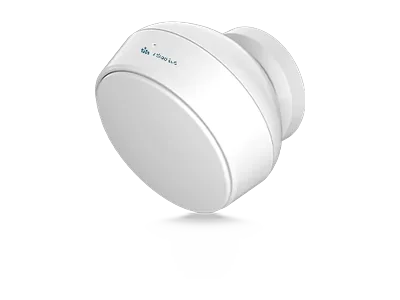
In each room's kit. Radar and PIR: it sees a person even if they don't move. No image or sound.
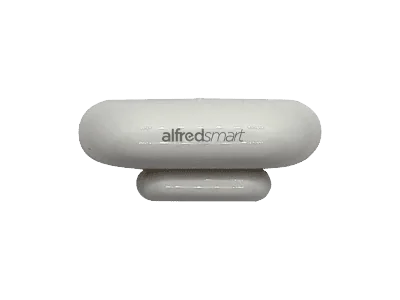
In each room's kit. It logs entries and exits: without the door opening beforehand, the room is not treated as empty. The same sensor, on the window, pauses the climate control if it is left open.
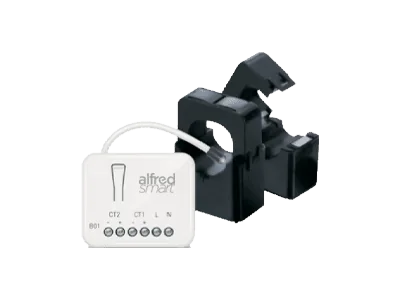
Optional. With it, kWh and euros are measured rather than estimated.
Eco gives the setpoints to the BMS you already have (BACnet, Modbus or KNX) or, if there is none, directly to the climate equipment (fan coils, VRF or splits) through a gateway. The thermostat, the electrical panel, the lock and the decor are left untouched. Before quoting, we check your installation and confirm in writing what is integrated and how.
The directive calls for automating and controlling consumption in many non-residential buildings; in Spain, the timeline depends on transposition. Eco provides occupancy-based control and continuous logging per room.
See the EPBD →Energy, euros and CO₂ per room, with the period and the method, for the owner's or investor's report.
See ESG →A measured saving is yours and can be sold: the rights are assigned to a delegated entity, an ENAC-accredited verifier validates it and, if the project qualifies, you may receive income.
Adjusting the climate control and lighting of each room to whether someone is really inside, instead of to a fixed schedule or a card in the slot.
There is nothing to bypass. The sensor has no switch or anything to touch, and the savings don't depend on the guest doing anything.
The dashboard keeps the three signals for that room and that day, minute by minute. That shows whether it had to do with Eco or with something else.
It is two battery-powered sensors per room, with no building work: about 10-20 minutes per room. It is installed room by room, during the housekeeping shift, without closing floors or stopping operations.
Yes, whenever you want: waiting times, pause setpoint and seasonal behavior. We adjust them for you or you do it from the dashboard.
We calculate it with your numbers, at no cost.