
Lights
Lighting that follows daylight
The more sun comes in, the fewer lights are on. Without touching a switch.
The key arrives on the phone with the booking. Climate, lights and blinds in every room, on the same platform your team uses.
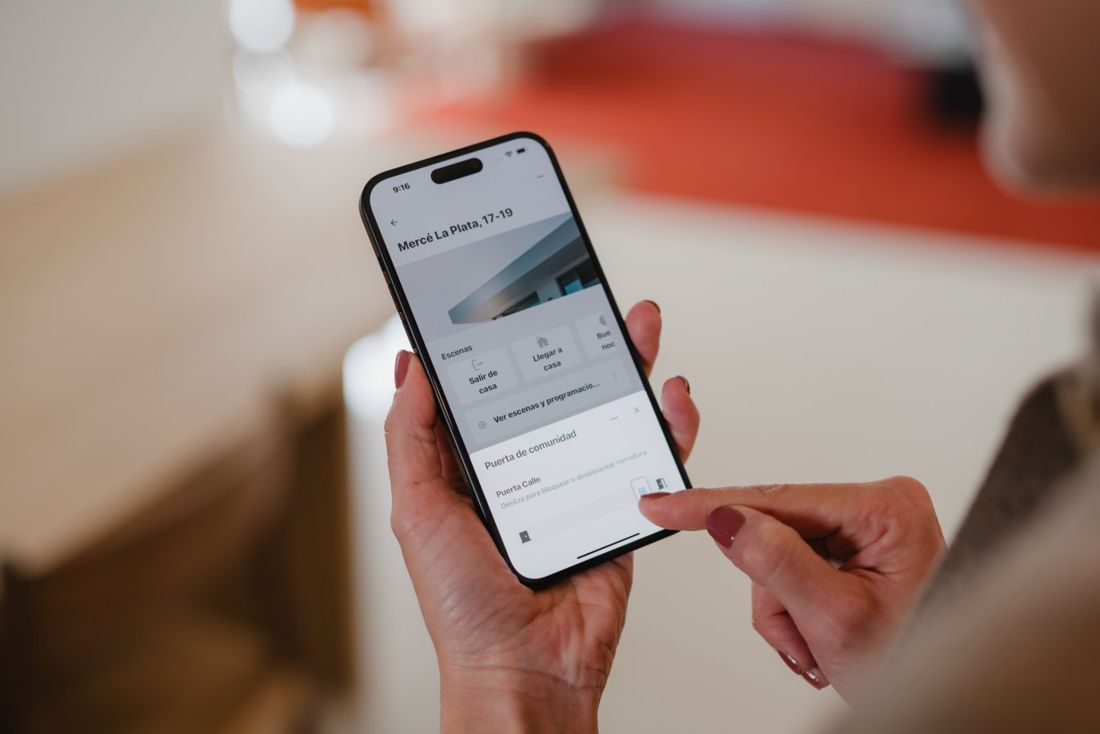
Hotel management, operations and maintenance.
Rooms nobody sees until a complaint comes in, lost cards and queues at reception.
Check-in without reception, every room visible to your team and shared areas booked from the phone.
Only what makes sense in a hotel, on a single platform.
Climate, lights, blinds and key for every room on the same platform. The key arrives on the phone with the booking and your team sees every room in real time.
Meeting rooms, gym and shared spaces: guests book from their phone and the booking opens the door, only during their slot. Your team stops lending keys at reception and knows who went in and when: bookings, users, deposits and access in one dashboard.
BREEAM In-Use and EPBD with measured data: it separates the consumption of shared areas and commercial units without entering the rooms, throughout the three years of the certificate.
Savings based on the real occupancy of each room, on top of the climate system you already have. It detects people, not movement. Today we're testing it in limited pilots.
Climate, lights, blinds and key for every room, on the same platform. Your team sees the status of every room in real time. Guests control it from their phone.

The status of every room, in real time and in a single dashboard. No going door to door.
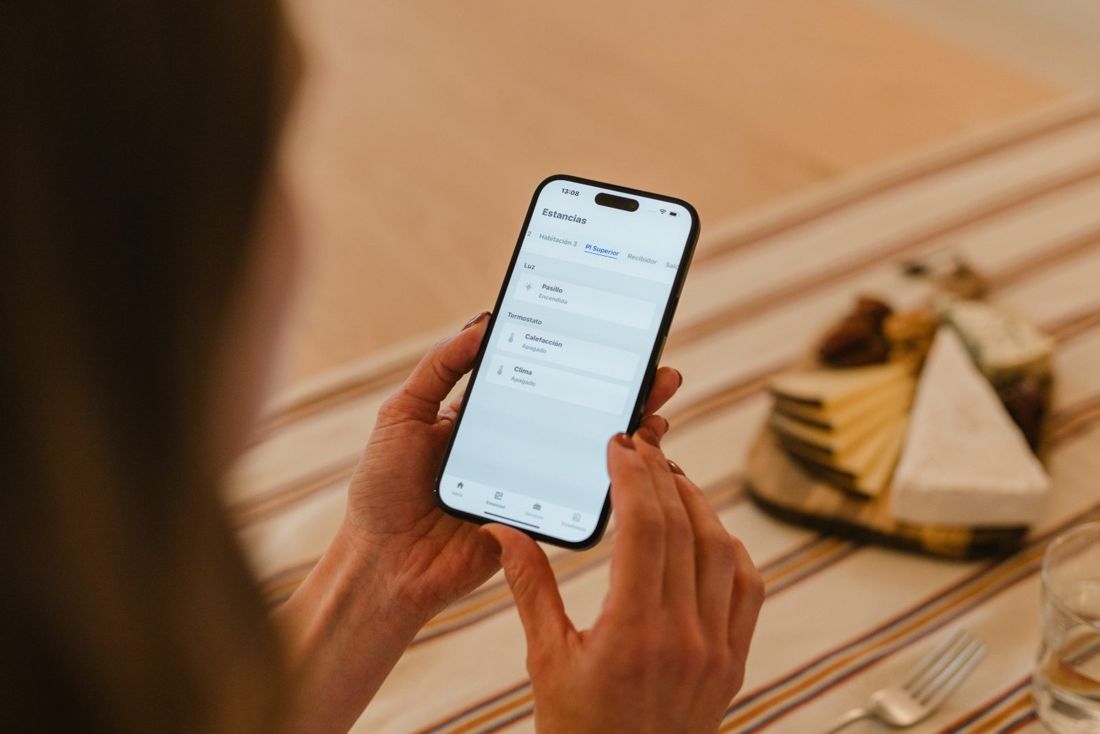
Climate, lights and blinds in their room, on the screen they already carry.
With the integration with your PMS:
A WebApp with the hotel's brand, with nothing to download. Guests open it from the booking link or with the QR code in the room.
With Lock, the key arrives on the guest's phone with the booking. No lost or badly encoded cards, and no stop at reception.
See Lock →Guests receive their key on their phone and the room gets ready for their arrival.
RoomControl works the same with both: the same platform, the same WebApp and Alexa. What changes is how it reaches each light, each blind and each thermostat.
For the rooms you already have. The modules go behind the switches, in the same box.
If the hotel has KNX, or will have it, RoomControl integrates it. The bus, push buttons and actuators stay yours, and you control them from the same platform.
With the switches you choose. Switches and push buttons in the hotel's brand and finish: RoomControl works behind them, out of sight.
Eco seeks savings based on each room's real occupancy, on the climate installation the hotel already has. It combines three signals: presence, door and booking. It's two sensors per room, presence and door, battery-powered and with no building work. Today we're testing it in limited pilots.
A key card switch detects a card, not a person. A second card is all it takes for an empty room to look occupied.
When the guest is still, reading or sleeping, a motion sensor considers the room empty. Eco can tell a still person apart.
Presence, door and booking. The room is only considered empty if the door has been opened first.
A limited pilot on one floor, with consumption measured before and after.
The calculation is this: hours per day the room spends empty with the climate control on, times the equipment's power, times the days in the year, times your energy price. The result is what is spent today with no one inside: the ceiling on what Eco can avoid. Eco is in its pilot phase and we don't publish a savings percentage yet, because we haven't measured it at scale. What it avoids in your hotel is measured by a pilot.
You get a range because we don't know the power of your climate system: from 1 kW (basic) to 2 kW (intensive). Choose yours to narrow it down.
For the hotel's asset or property manager: Metrics separates the consumption of shared areas and commercial units without entering the rooms, with minimal infrastructure (for example, radio reading of the main meter and the sub-meters). That data covers the Part 1 monitoring of BREEAM In-Use and the Part 2 data throughout the three years of the certificate, and serves the EPBD. Talk about BREEAM In-Use →
The directive requires buildings to be monitored and controlled in phases. In Spain, the timeline depends on transposition.
See EPBD →Certification for buildings in usePart 1 monitoring and Part 2 data, throughout the three years of the certificate.
See BREEAM In-Use →Our team will get back to you with what fits your building.