Lights
Lighting that follows daylight
The more sun comes in, the fewer lights are on. Without touching a switch.
Coliving, student housing and flex living with the empty room detected and measured, access per stay and bookable shared spaces.

Operators and owners of flex living, coliving and student housing: operations, maintenance and sustainability management.
Energy is included in the rent, so nobody switches it off: the room stays heated or cooled while the resident is out, at weekends and between one stay and the next.
You know how long each room stays empty and what it uses, each resident opens with their phone during their stay, and shared areas are booked without going through reception: the booking opens the door.
The occupancy you sign isn't always the occupancy that consumes. A building that's full on paper has lots of empty rooms by mid-morning.
Lectures or work: several hours out of the room from Monday to Friday. This is the big waste, because it happens every day.
Trips home, travel and long weekends. The room doesn't switch itself off, and nobody switches it off for the resident.
Christmas, Easter and exams taken elsewhere: whole weeks with the system running for closed rooms.
From check-out to the next check-in, and in summer half-full floors with short stays. With fixed schedules, that mix can't be managed.
And on top of all four, the window left open with the heating on. It's not carelessness on the resident's part: if energy is included in the rent, they have no reason to switch it off.
Managed from the same dashboard and the same app.
It detects whether someone is in the room and cross-references that signal with the door and the booking: you know how long each room stays empty and what it spends, and pausing the climate control and lighting is tested in the pilot.
Study rooms, gym, laundry and shared kitchen, booked from the phone: the booking opens the door only during their slot. Your team stops lending keys and knows who went in and when.
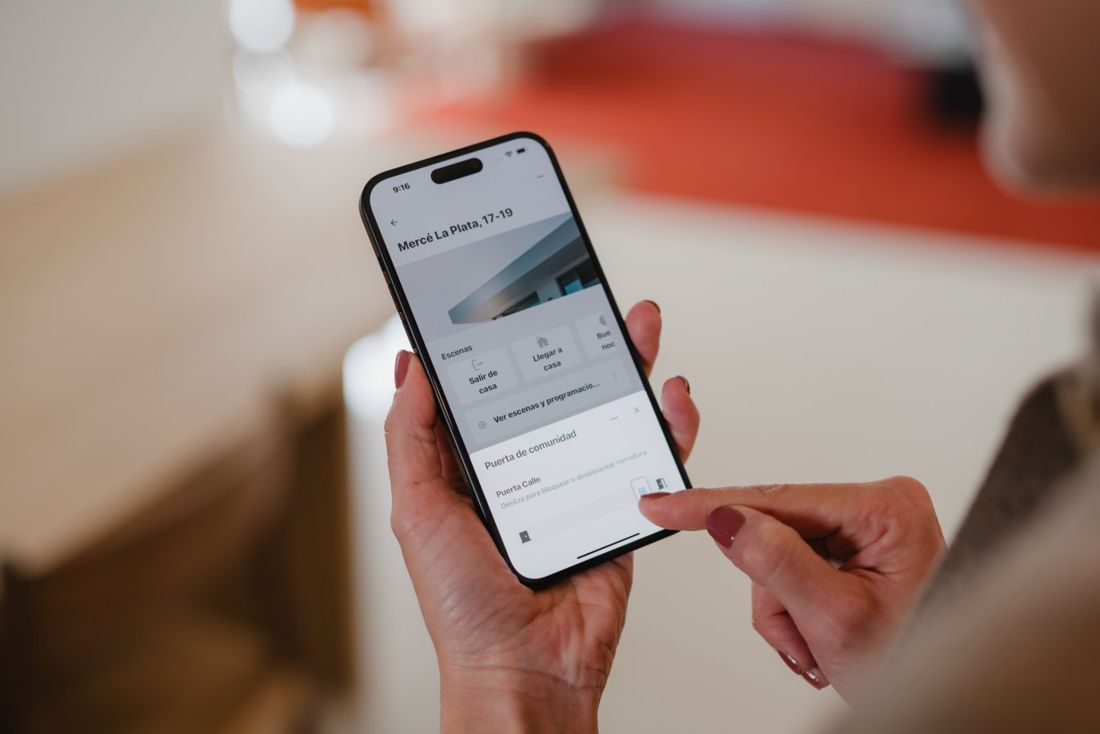
Main entrance, room and shared areas from the phone: access starts and ends with the stay, and whoever leaves can no longer open, with no keys to collect.
Notices and events in the same app the resident uses to open the door and make bookings: the operator talks to the whole building from the same dashboard.
It measures each unit, applies the real tariff and stores every reading in a locked, auditable period. With allowances: energy is included in the rent up to a limit, and anything above it is measured and rebilled. The same data serves the EPBD and the owner's reporting.
From booking to door, on your phone. Residents book the study room, gym or laundry, and the booking opens the door only during their slot. Outside their slot, it doesn't open: bookings enforce themselves, with no one keeping watch.
Two-hour maximum booking. Keep it quiet: take calls outside.
The calculation is this: hours per day the room spends empty with the climate control on, times the equipment's power, times the days in the year, times your energy price. The variables come from your bill, your calendar and your installation. The result is what is spent today with no one inside: the ceiling on what Eco can avoid. Eco is in its pilot phase and we don't publish a savings percentage yet, because we haven't measured it at scale. What it avoids in your building is measured by a pilot.
You get a range because we don't know the power of your climate system: from 1 kW (basic) to 2 kW (intensive). Choose yours to narrow it down.
A hotel has a pattern; a student residence has an academic year, and flex living has turnover. Each moment is written as a rule, and in the pilot it is tested on your climate system, room by room.
A gentle pause and a quick recovery: the resident comes back mid-afternoon and shouldn't notice a thing.
More margin before pausing and a lower set point: if the room has been empty since Friday, it doesn't need to be ready on Saturday morning.
Away mode, with the minimum set point you choose for the whole period.
With the PMS, the rule can put the room to rest at check-out and bring it back for the next booking, not the team's next round.
With the PMS, the rule can bring the room back to comfort before check-in; this is tested in the pilot. The design principle is that the resident notices nothing, not squeezing out every kWh.
The detector captures no images or sound, and doesn't identify anyone.
There's nothing to switch off, cover or remember. Unlike the key card holder, detection doesn't depend on the resident's cooperation.
It depends on the hours the rooms are empty with the climate on, the equipment's output and your energy price. The calculator gives you what is spent today in those hours. We don't yet publish a savings percentage because we haven't measured it at scale: we propose measuring it in a pilot.
An annual energy bill, the academic or occupancy calendar, the type of HVAC and the plans of a typical floor.
The dashboard stores each room's signals (presence, door and booking) throughout the day. You'll know whether the room was marked as empty or it was something else.
No, if it's planned for the summer. And if you want to see it sooner, a pilot floor is installed with no building work and without closing the building.
Pause and recovery are tested in the pilot on the system you already have, without taking control of the building. Before quoting, we check the installation and confirm compatibility in writing.
Our team will get back to you with what fits your building.