Lights
Lighting that follows daylight
The more sun comes in, the fewer lights are on. Without touching a switch.
Alfred connects to the BMS, HVAC, lighting and meters you already have, without replacing them: BACnet, Modbus, KNX, M-Bus and wireless sensors where data is missing.
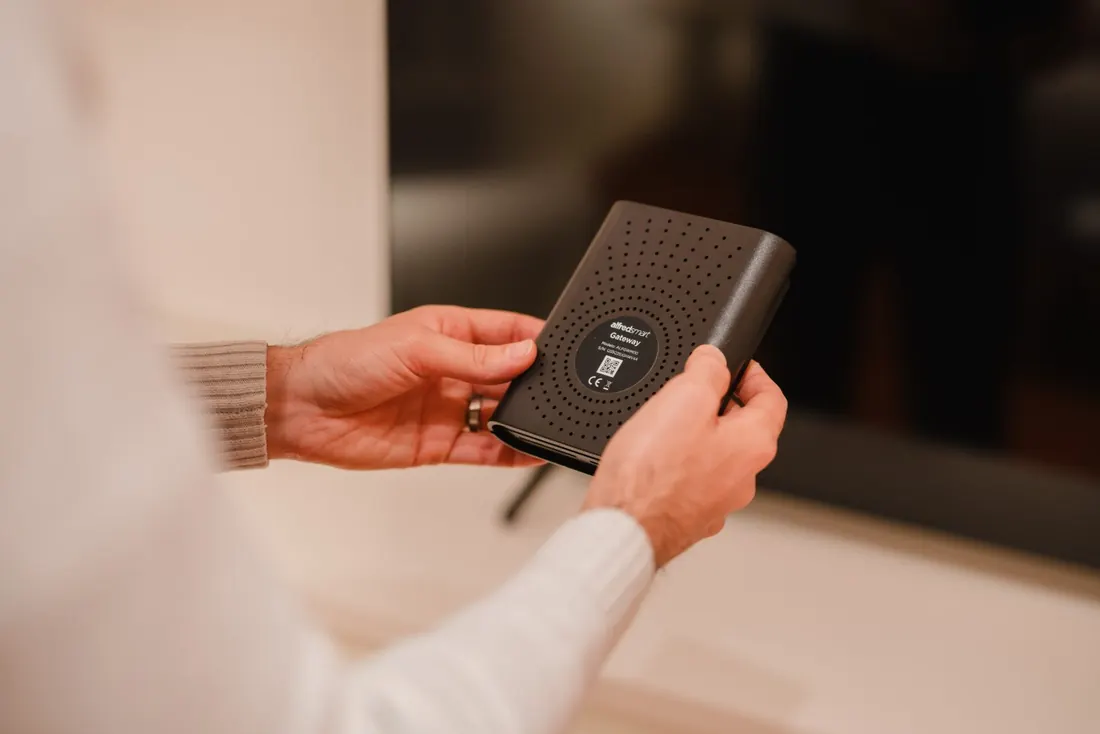
An Alfred gateway reads the building's equipment and systems and sends the data to the Alfred cloud, which is also ours and not a third party's. From there every product uses it: Metrics measures it, Eco cross-references it with occupancy and the manager sees it in the Hub.
We are hardware-agnostic: we read what is there instead of replacing it. If something is missing, we provide the equipment, the integration and the maintenance.
The platform reads the BMS over BACnet, Modbus or KNX and takes its readings to the cloud, where all the products use them.
If an area has no meter or sensor, a wireless one is added, with no building work. See the device catalogue.
The buses and protocols already used by the building's BMS, HVAC, lighting and meters.
The protocol used by most BMS and HVAC control units in commercial buildings.
Power analysers and electricity meters.
Lighting, blinds and climate control in offices, hotels and homes with a KNX installation.
Water and thermal energy meters for each home or unit.
Z-Wave, LoRa, Wi-Fi and Bluetooth for sensors, actuators and locks. For BREEAM In-Use, LoRa sensors on the main meter and the sub-meters separate the consumption of shared areas, commercial units and homes without entering any of them.
Where the building has no meter, or the one it has can't be read, Alfred adds its own.
It is fitted with a current clamp around the cable: it measures without cutting the supply or stopping activity.
One box converts M-Bus meters to Modbus and brings together up to 256 water and heat meters at a single point.
Electricity, hot and cold water, heating and cooling, and solar: generation, self-consumption, import and export.
The platform brings in the hourly price and emissions of the electricity grid from ESIOS, OMIE and PVPC.
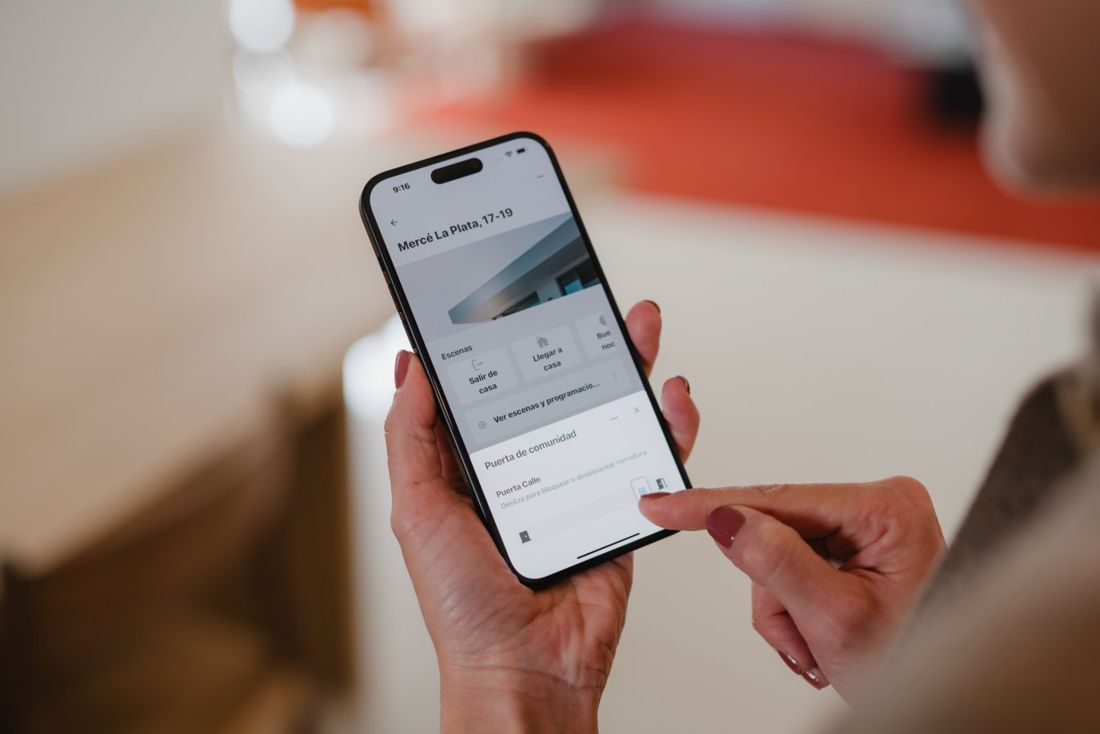
The platform controls the most common types of lock, so that the app or the booking opens the door. See Lock.
It is fitted over the cylinder on the inside of the door, without changing the lock.
It replaces the cylinder and opens from the app.
For main entrances and access doors that already open with an electric push button.
Those that open with a push button, such as garage or lobby doors.
Opens with a code or a card, as well as with the app.
The relay, the keypad and the reader need an electrically operated door. If it isn't, an electrician does that before it is connected.
Alfred's data and actions also reach the software your team and your residents work with.
Consumption and re-billing as PDF, SEPA direct debit batch and Excel. An API for your ERP, as a project.
If you use a PMS or property management software, we'll work out with you how to connect it.
Upload of the electricity distributor's consumption data, as a project, for supplies without their own meter.
A BMS controls the installations, but it doesn't know who occupies each space or split consumption between tenants. Alfred doesn't replace it: the platform reads its points and cross-references them with occupancy and bookings. Sending savings setpoints back is what Eco tests in its pilots.
Every consumption from the BMS and the meters, by building, floor or home, with its history.
See Metrics →Eco combines presence, door and booking to know which room is empty. The command to the BMS is tested in a pilot.
See Eco →Monitoring, logging and comparing consumption is part of what the EPBD asks of automation and control systems. The adjustment is still done by the BMS.
See the EPBD →Article 13.10 of the EPBD describes four capabilities of automation and control systems. In Spain today only BACS for non-residential buildings above 290 kW is in force, as required by the RITE; the rest depends on transposition. See what the EPBD requires and what is in force.
Every consumption, by building, floor or home, with its history. The installations are still adjusted by the BMS.
It compares periods and buildings, and alerts you by email and in the app when consumption exceeds the threshold you set.
The gateway reads the BMS, the HVAC and the meters over BACnet, Modbus, KNX and M-Bus, whatever the manufacturer.
CO₂, temperature and humidity sensors in the spaces where the data is needed.
They control the installations well, but many don't compare consumption, talk to other manufacturers' equipment or measure air quality. There is no need to replace them: Alfred adds that layer on top.
In residential, a BMS is not mandatory and earns no BREEAM points. Alfred reaches Very Good with any of these three architectures. See BREEAM Vivienda.
Gateway, thermostat, temperature and humidity sensors and an energy meter in each home, without a BMS.
The meters outside the home are read by LoRa radio, without installing a BMS.
If the project includes a BMS, the gateway reads it. This option costs at least €300 more per home.
As a BREEAM partner we have supported more than 5,000 homes rated at least BREEAM Very Good.
No. Alfred's platform reads the BMS you already have over BACnet, Modbus or KNX and works on top of it. The BMS keeps running the installations.
Wireless sensors and meters are added where data is needed, with no building work. For many uses, such as BREEAM Vivienda, there is no need to install a BMS.
Yes: consumption and re-billing come out as PDF, SEPA direct debit batch and Excel. An API for your ERP is assessed as a project.
Integrations with management software are done as a project. Tell us which one you use and we'll tell you how it connects.
We'll show you what Alfred can read from what you already have and what would need to be added.